

A student makes masks for the deaf for free
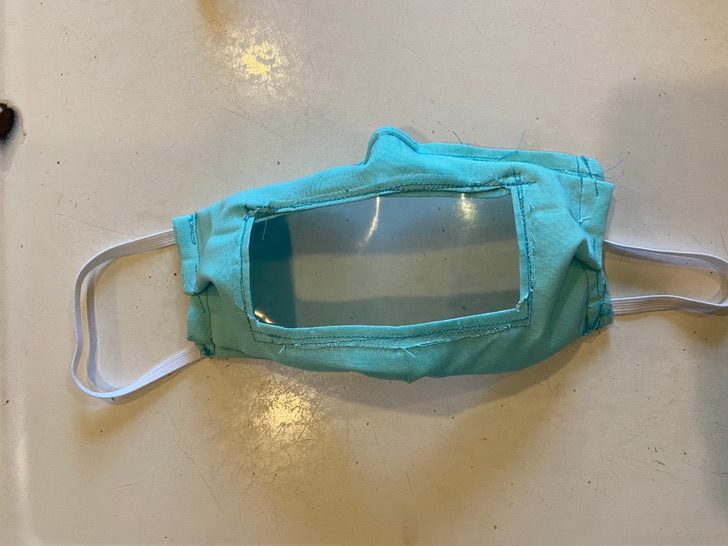
Kentucky student Ashley Lawrence is sewing with her mother to help the deaf and hearing impaired community.
“I modified the model to be adapted to those who read the lips or who, during communication with the sign language, rely on facial expressions to understand meanings and intentions – continues Ashley – facial expressions are part of the grammar of the language of signs, as well as the lip. Information is lost if the face cannot be seen.”
Thanks to these masks, the deaf will not only be able to continue communicating with each other more easily, but will also be able to interact with those who do not understand sign language (such as doctors, nurses or pharmacists). With a similar device, the deaf could understand it without too much trouble by reading the movements of his lips.
To create them, the young woman is using new sheets and a plastic roll left over from an old home-made job. But soon he will need to buy more material and that’s why he has opened a fundraiser on GoFundMe to finance the project.
At the study there is also a second model of mask. It is designed for those who have hearing aids and cochlear implants and close either on the neck or behind the head. In less than two days, tens of orders were received from over six U.S. states.
The request from Italy
A shortcoming that does not only concern the United States but also Italy. On March 28, an institute for deaf people in Messina asked to produce specific protective devices for those who need to read the movement of the lips.
A week earlier, on March 20, Carla Ciotti, president of the Il Quadrifoglio di Ravenna association wrote a letter to inform the communication difficulties that deaf deaf people are experiencing even in this time of emergency. For her, especially in hospitals, it would always be necessary to have someone able to translate Lis, the Italian sign language.
It is not the first time that deaf people, who go to the emergency room, remain there for a whole day (when it is okay) completely isolated from communication – it is read – because rightly for health purposes, operators must speak with the mask, but deaf people understand for the most part also from the lip. “
Source: Mashable